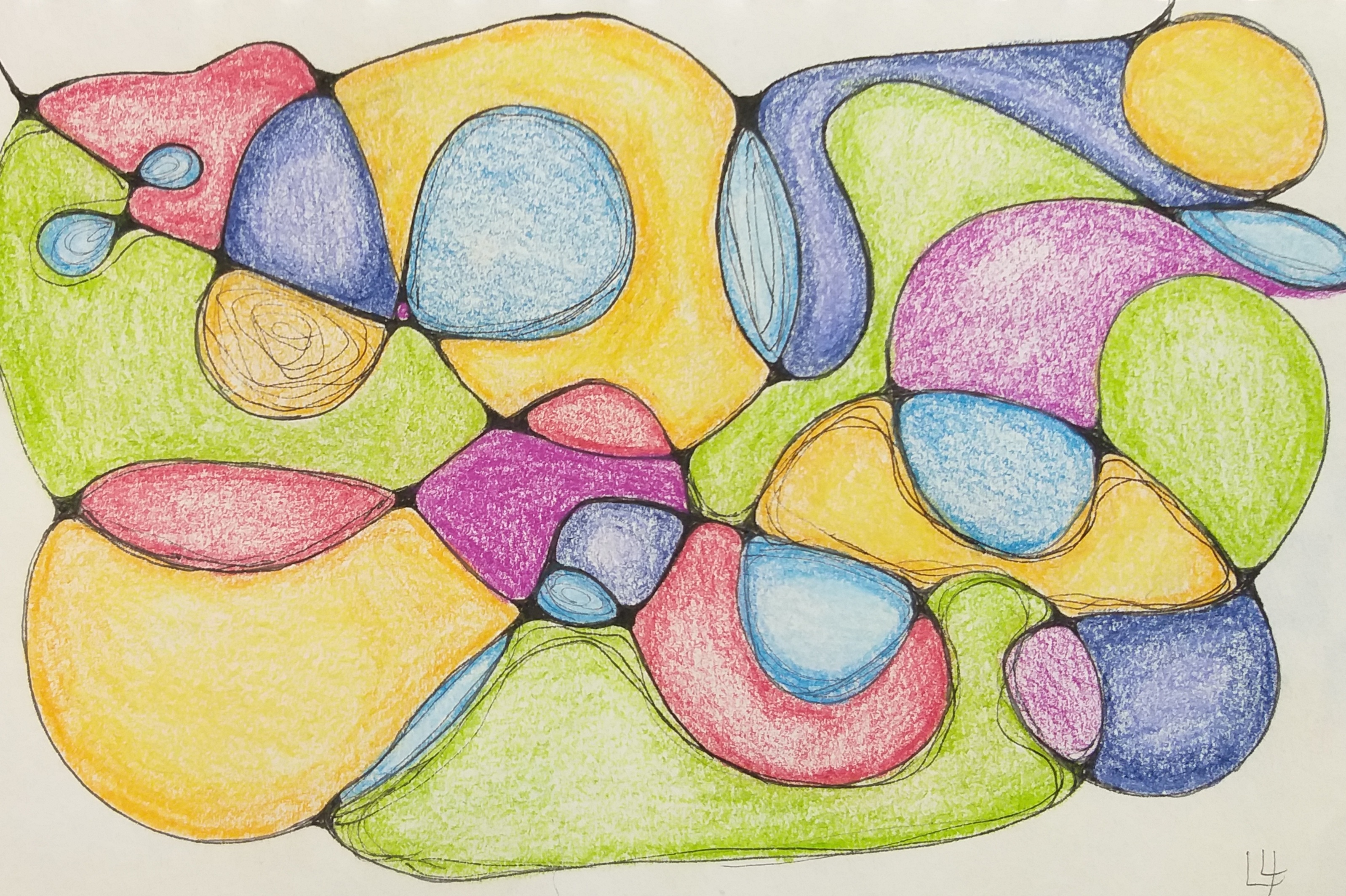
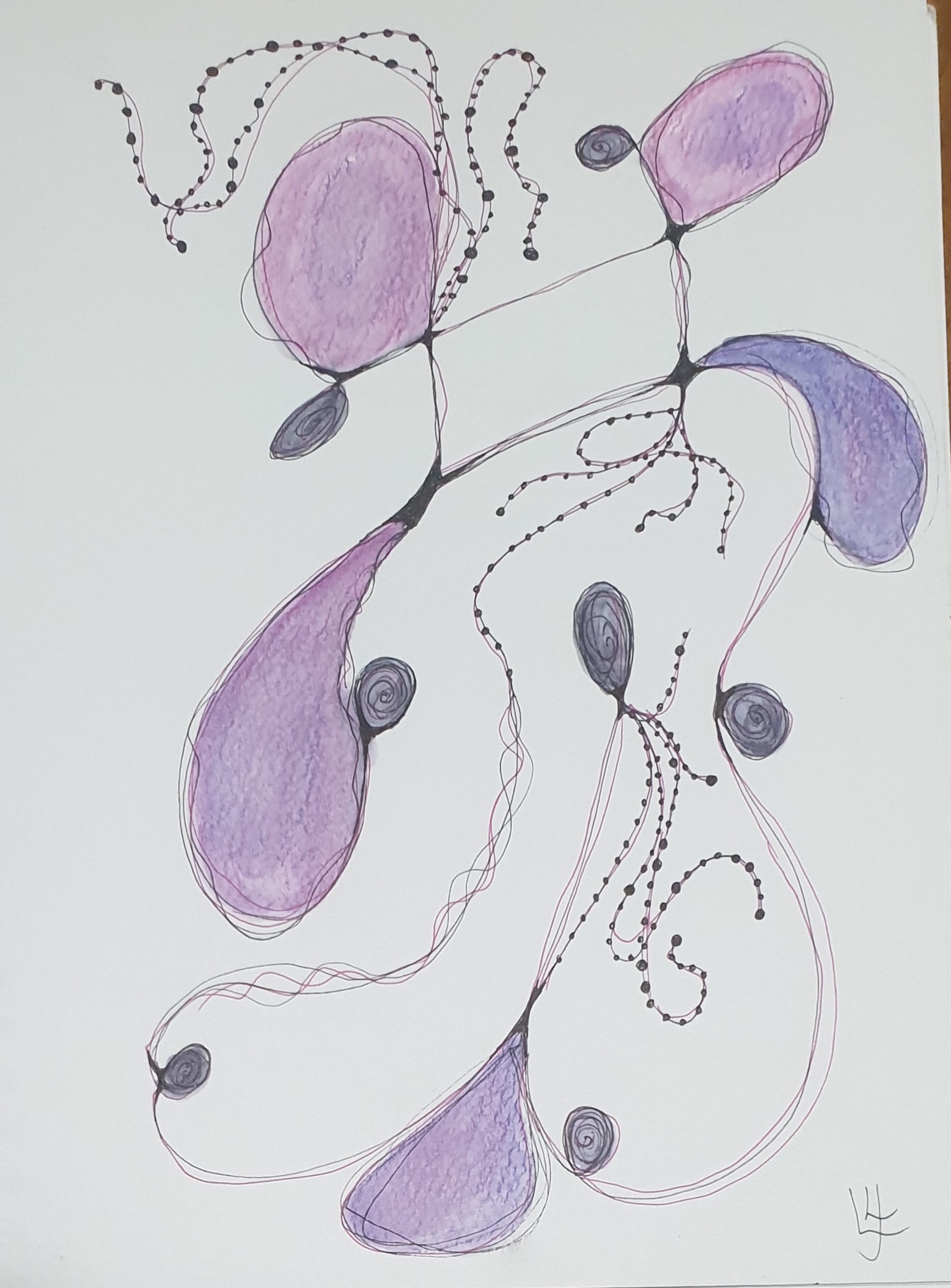
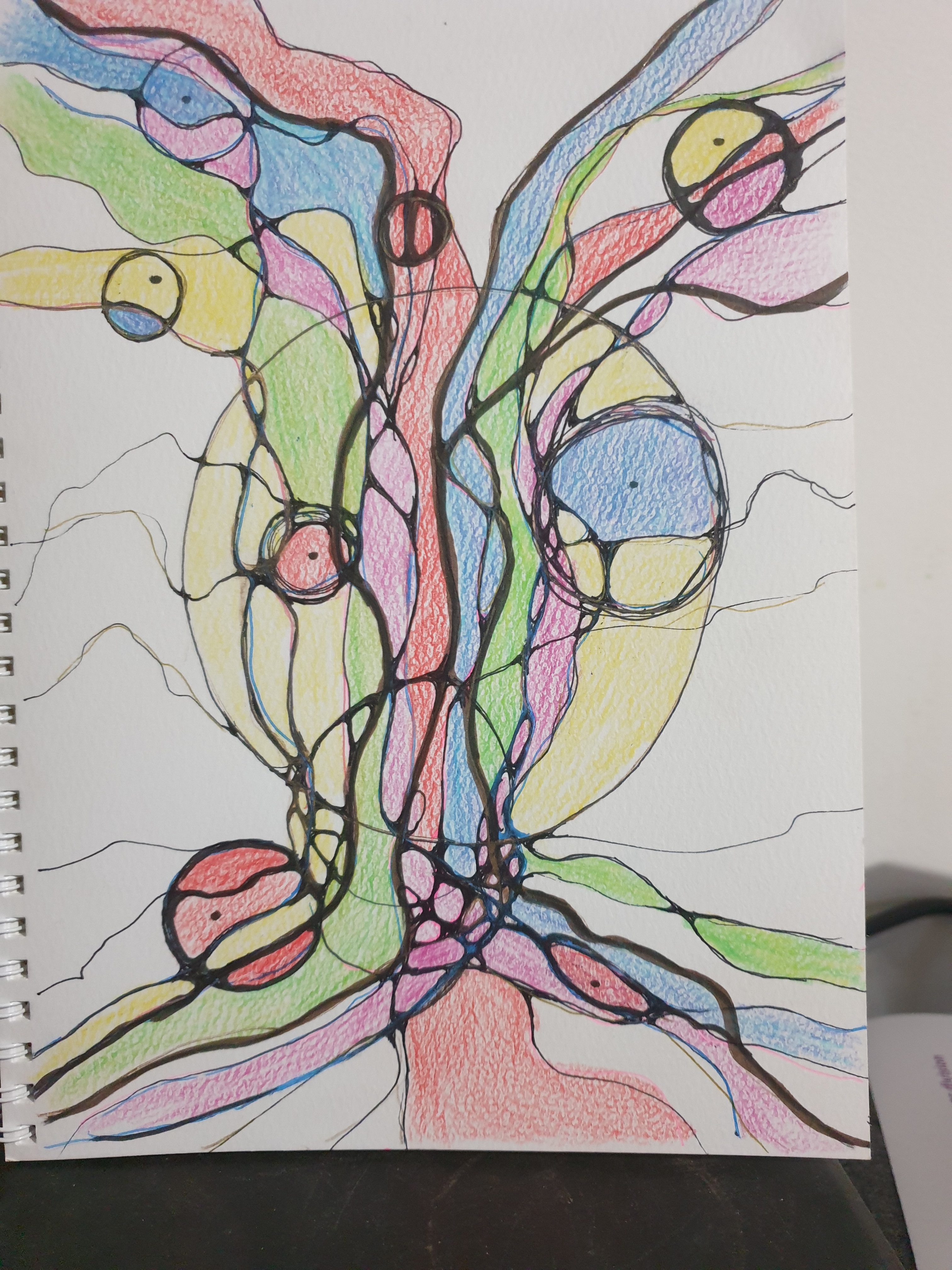
Neuro- relates to neurons or cells that carry messages throughout your body from your brain. Graphics- artistic symbols or imagery.
It is a doodling and mindfulness exercise. No drawing skill required, just a willingness to have a go. The method encourages your brain to make new neural pathways and connections and is a great way to take your mind off worries or to kick start your creativity. FREE for MASH Members.
Mosaic Mondays will run every Monday from 13th November until 11th December at Lorri’s House from 10am, or until our arms get sore. (usually around 2pm). $5 for financial members. Adhesive, Grout & old china included. BYO snacks/lunch & substrate. (item to mosaic) Visitors on application. Contact Lorri via mash email malleeartists.swanhill@gmail.com
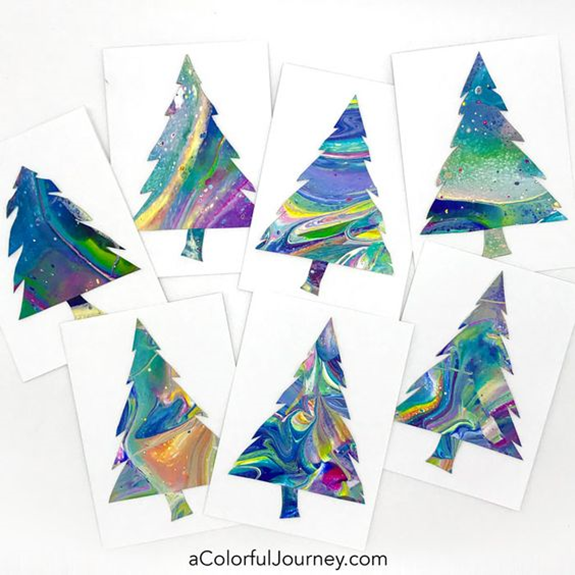
Wednesday 1st: First Wednesday Workshop Bring along ideas and materials to make Christmas cards or other small gifts for family and friends. Handcrafted art cards are a real treasure. We will be exploring painting, papercraft, textiles, stitching and more. Bring along previously painted watercolour scraps, paints pencils, paper, old cards and any bits and bobs you think might be fun to add!
Previously painted pieces of paper used to make Christmas cards.
Monday 6th: Mosaics at Lorri’s
Starter materials available such as broken china and some glass tiles. $5 for members covers adhesive and grout. Message Lorri to find out more.
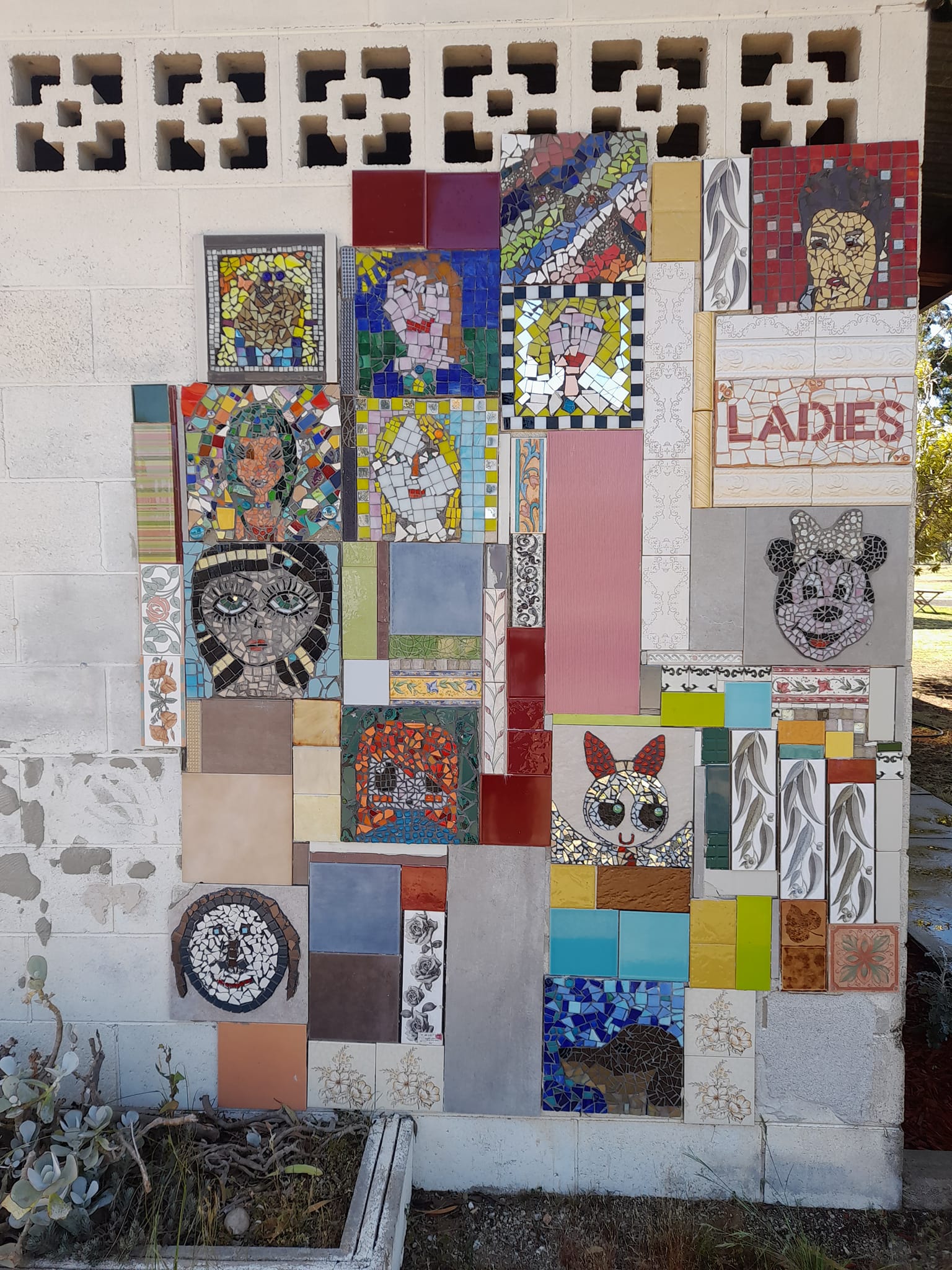
Mosaic wall, various child artists . Situated at Moulamein Caravan Park, curated by Sandy Peeters. Photo by Merrilyn Kemp, 2023.
Bring along art you wish you never made/needs fixing/screaming for help! Have you got something that you have never finished because you just don’t know what to do next? Bring it along and members will help each other out with suggestions and constructive critiques!
1stNovember:
Ideas to create unique, hand painted Christmas cards for those special people you love! Including watercolour, collage, papercraft
April 5th: Pen & Wash with Lorri lambert $5 (plus normal hall fee) $20 non members
Archival pens supplied. BYO watercolours and paper A5 or A4 (can be supplied if needed)
May (no workshop due to Kerryn Finch Sat 6th)
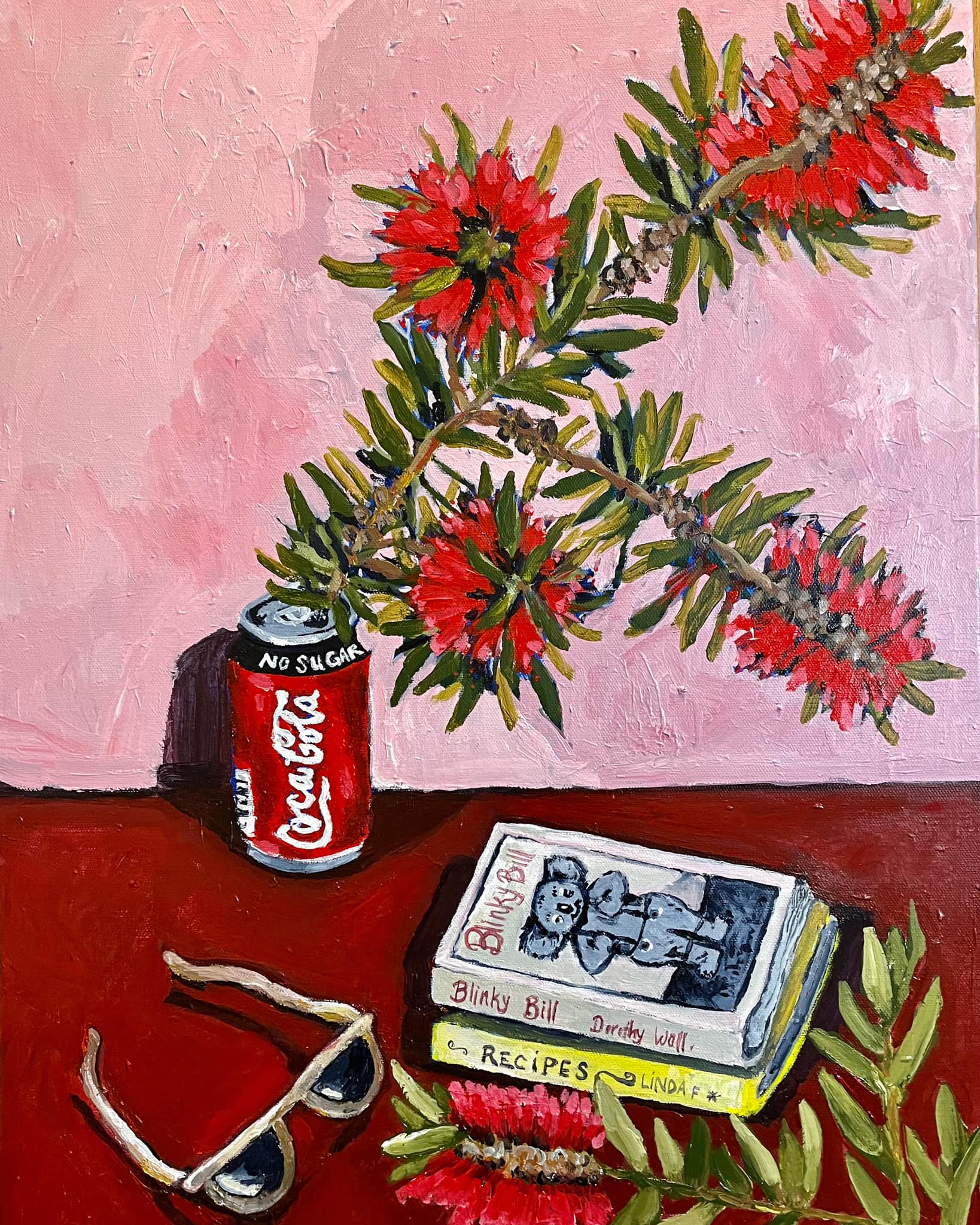
Kerryn Finch Workshop:Expressive Still Life
Sat 6th May 10am—3pm
$60 members $80 guests
Kerryn loves painting still-life , but with some quirks and things not typically seen in traditional still-life painting.
Her style has developed over time, and Kerryn describes it as being a bit like her own language. She paints the things that have meaning to her, whether that’s a packet of chips, or a CD cover or some flowers from her garden, it’s her unique view of the world.
Hang your work on the wall. Find a neutral coloured wall (white or grey) and hang your work at the height where the middle of your piece will be parallel to where your camera is pointing – either on a tripod or sitting on a hard surface, such as a shelf or table.
2. Light your work. If shooting indoors, make sure you shoot in a room with plenty of windows and natural light. Avoid direct sunlight on your artwork as this may create glare and affect the colours of your photograph. You can light your work with lamps. For 2D works, all you need is two lights. (Preferably using Daylight bulbs). Place the lights halfway between the camera and your work on the wall at a 45-degree angle pointing towards the wall (this angle will help eliminate any glare you might get from the lights). If you are still experiencing glares from the lights – you can diffuse the lights with white sheets in front of them. See image for camera placement.
3. Once your artwork is hung on the wall and lit with lamps, double check that the camera is set to where the lens lines up with the middle of the painting. The artwork should take up the majority of the frame in your picture. The ISO and aperture of your camera are very important to get clear, crisp and bright images of your artwork. In this case, since we want very crisp images, we want a low ISO. Studio shots will generally be shot at ISO 100. The f-stop of the aperture of your camera adjusts how much light is let through the lens by making the opening bigger or smaller. The higher the number, the less light is being passed through. With a DSLR the ideal range for shooting artworks is between f-8 and f-11. Set your camera’s timer to four or five seconds so that pressing the shutter button doesn’t create a shake in your image.
#NOTE Look up specific instructions for your Camera or Smart Phone for step 3









 Mallee Artists Swan Hill Inc.